Esports Industry Outlook 2026: Key Trends, Tournament Models, and Global Audience Growth
By Sohail Shabbir · Games & Gaming · Wed Aug 05 2026
In-depth analysis of the esports industry outlook in 2026. Explore revenue streams, franchised vs open tournament models, mobile gaming expansion, and global au
Esports Industry Outlook 2026: Key Trends, Tournament Models, and Global Audience Growth
An authoritative, data-driven deep dive into the financial realities, structural tournament transformations, mobile gaming expansion, and global viewership dynamics shaping competitive gaming in 2026.

1. Executive Summary & Industry Market Snapshot
The global esports ecosystem in 2026 is undergoing a profound structural recalibration. Following years of hyper-accelerated venture capital injection and speculative valuations, competitive gaming has transitioned from an era of growth-at-all-costs expansion into a disciplined age of unit-economic sustainability, operational leanings, and direct-to-consumer monetization. Industry projections indicate that global esports market revenue will surpass $2.2 billion in 2026, driven not purely by speculative sponsorship contracts, but by robust publisher-partner co-branding, digital item integrations, regionalized media rights, and expanding mobile esports ecosystems.
Concurrently, the global esports audience continues its steady upward trajectory, exceeding 640 million total viewers worldwide. This massive audience is increasingly stratified into dedicated esports enthusiasts—who consume dozens of hours of tournament broadcasts weekly—and casual viewers who engage primarily through creator co-streams, short-form highlights on TikTok and YouTube Shorts, and major international championship events. As traditional media conglomerates and global brands seek direct touchpoints with digitally native Gen Z and Alpha audiences, esports remains the premier gateway to engaging youth culture.
However, navigating this landscape requires a deep understanding of structural market shifts. Legacy franchise models are adapting to accommodate team financial burdens, open tournament circuits are experiencing a resurgence under new multi-title formats, and mobile esports in emerging regions continues to dwarf traditional PC and console viewership metrics. This report provides a comprehensive analysis of the core market trends, structural business models, revenue drivers, and strategic imperatives defining the esports industry outlook in 2026.
2. Global Audience Demographics & Regional Growth Drivers
The expansion of the global esports audience is neither uniform nor monolithic. Geographically and culturally, the market exhibits distinct operational dynamics across key territories. Asia-Pacific (APAC) retains its dominant stance as the heartbeat of global competitive gaming, representing over 56% of total global viewership. China remains the single largest national market in revenue and audience size, bolstered by sophisticated government support, dedicated esports infrastructure in cities like Shanghai and Shenzhen, and publisher-driven franchised leagues such as the King Pro League (KPL) and LPL (League of Legends Pro League).
In Southeast Asia (SEA), South Asia, and the Middle East & North Africa (MENA) regions, growth is accelerating at unprecedented rates. Driven by near-universal smartphone penetration and high-speed mobile network availability, titles such as Mobile Legends: Bang Bang (MLBB), Free Fire, and PUBG Mobile draw peak simultaneous viewership figures that frequently eclipse tier-one Western PC tournaments. In countries such as Indonesia, the Philippines, India, and Saudi Arabia, competitive mobile gaming has achieved mainstream cultural status, integrating seamlessly into university athletics, television broadcasts, and government youth initiatives.
Meanwhile, the North American and Western European markets are entering a stabilization phase focused on deepening audience monetizability rather than raw follower acquisition. Organizations in these regions are placing significant focus on expanding demographic inclusiveness. Female competitive circuits, spearheaded by Riot Games' VALORANT Game Changers initiative and independent grassroots leagues, have proved that targeted investments in underrepresented segments yield massive dividends in audience goodwill, brand safety, and new sponsorship inflows.
Key Demographic & Regional Snapshot (2026 Data Points):
- Global Viewership: 640+ Million (310M Enthusiasts, 330M Casual Viewers).
- Dominant Region: APAC accounts for 56% of total global audience engagement.
- Fastest Growing Regions: MENA (+18.4% YoY) and LATAM (+15.2% YoY).
- Gender Diversification: Female viewership in tactical FPS titles grew to 34% in 2026.
- Mobile vs. PC Split: Mobile esports represents 48% of total live tournament watch-time globally.
3. The Evolution of Tournament Models: Franchising vs. Open Systems
One of the most intensely debated operational topics over the past decade has been the structural format of competitive leagues. Between 2017 and 2021, the industry witnessed a massive push toward North American style closed franchising models, modeled after traditional sports leagues like the NFL and NBA. Organizations paid multi-million-dollar franchise buy-in fees ($10M to $30M+) for guaranteed slots, revenue sharing, and local venue rights in leagues such as the Overwatch League (OWL), Call of Duty League (CDL), and League of Legends Championship Series (LCS).
However, the economic realities of 2026 have catalyzed a dramatic evolution in tournament architecture. The pure closed-franchising model struggled under heavy capital costs, static broadcast revenue, and high player salary inflation. Consequently, publishers and tournament operators have shifted toward hybrid partner ecosystems and flexible open-qualifier frameworks.
Comparative Analysis: Franchise vs. Open vs. Hybrid Partner Models
| Model Type | Primary Examples | Financial Mechanics | Key Advantages | Structural Challenges |
|---|---|---|---|---|
| Closed Franchising | Legacy LCS, CDL, KPL | Upfront slot buy-ins, shared league revenue pool | Long-term slot security, high partner alignment | Massive capital barrier, inflexible costs, risk of stagnant competition |
| Open & Swiss Circuit | Counter-Strike 2 (ESL/BLAST), Dota 2 TI | Prize pool distribution, open qualifier entries | Grassroots path-to-pro, high stakes narrative storytelling | Volatile income for orgs, revenue dependency on placement |
| Hybrid Partner Ecosystem | VALORANT VCT, Apex Legends ALGS | Publisher stipends + digital skin revenue share + open ascension slots | Financial sustainability, guaranteed stipend, merit-based entry | Strict publisher governance, limited team operational autonomy |
The Hybrid Partner Model—pioneered most successfully by Riot Games in VALORANT Champions Tour (VCT)—has emerged as the benchmark for 2026. Under this structure, publishers eliminate multi-million dollar buy-in fees. Instead, publishers select elite partner organizations based on financial stability, content reach, and brand health, paying teams a base annual stipend while sharing substantial revenues generated from in-game digital team cosmetics. Crucially, hybrid systems incorporate tier-two "Ascension" or promotional tournaments, preserving the open path-to-pro dream while providing premier teams with predictable financial baselines.
4. Revenue Streams & Commercial Monetization Shifts
Historically, esports organizations depended disproportionately on corporate sponsorship, which accounted for up to 60-70% of total team revenue. When macroeconomic headwinds impacted marketing budgets, esports orgs faced severe liquidity challenges. In 2026, the financial blueprint of esports has diversified significantly across four primary revenue pillars:
- Direct Publisher Co-Branding & In-Game Items: Digital cosmetics (team weapons skins, player stickers, team spray emotes) have matured into multi-hundred-million-dollar revenue generators. Publishers share 50% or more of net digital sales directly with qualified teams. For tier-one organizations, in-game item revenues now frequently exceed traditional sponsorship totals.
- Performance-Integrated Brand Partnerships: Non-endemic brands (automobile manufacturers, fintech platforms, beverage leaders, consumer electronics) no longer buy simple jersey logo placements. Instead, brand activations in 2026 focus on interactive broadcast integrations, custom metaverse experiences, real-time telemetry overlays, and creator-led affiliate programs.
- Media Rights & Distributed Broadcast Monetization: While centralized exclusive broadcasting deals with singular platforms (such as the legacy YouTube-only contracts) have largely ended, multi-platform syndication has flourished. Broadcasters distribute non-exclusive streams across Twitch, YouTube Gaming, Kick, and regional OTT apps, augmented by official co-streaming licenses granted to popular gaming influencers.
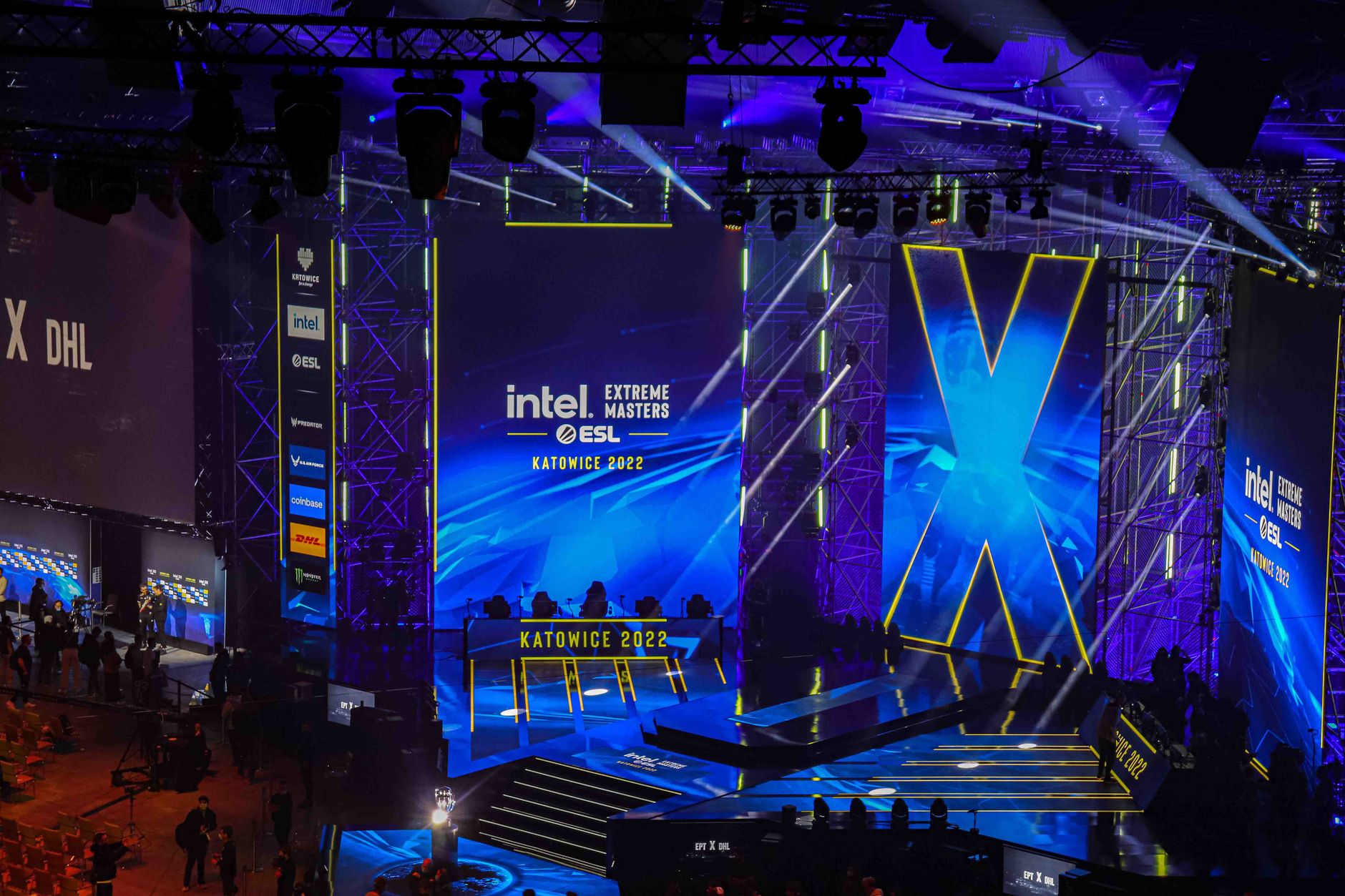
- Experiential Live Events & Merchandise Hubs: Arena events, world championship finals, and regional fan festivals have returned as major profit centers. High ticket demand, venue food and beverage share, physical lifestyle apparel drops, and VIP meet-and-greet packages provide recurring high-margin income for event operators.
5. Technological Innovation & Data-Driven Analytics
Technological advancement continues to reshape how esports matches are executed, analyzed, and broadcast. Artificial Intelligence (AI) and automated real-time telemetry engines have become indispensable assets for top-tier competitive rosters and broadcast media productions alike.
Professional esports analyst teams deploy complex statistical modeling to evaluate player performance, map control metrics, pick-and-ban drafting strategies, and economic utility utilization. Below is a real-world Python implementation demonstrating how data engineering teams parse match telemetry logs to calculate advanced player performance ratings, KDA ratios, and weighted impact scores across tournament datasets.
Esports Performance Analytics Engine (Python Implementation)
import numpy as np
import pandas as pd

class EsportsAnalyticsEngine:
    def __init__(self, weights=None):
        self.weights = weights or {
            'kills': 1.0,
            'deaths': -0.7,
            'assists': 0.5,
            'first_bloods': 1.5,
            'clutch_wins': 2.0,
            'damage_per_round': 0.01
        }

    def process_player_stats(self, match_data: pd.DataFrame) -> pd.DataFrame:
        df = match_data.copy()
        df['kda_ratio'] = (df['kills'] + df['assists']) / np.maximum(df['deaths'], 1)
        df['impact_score'] = (
            df['kills'] * self.weights['kills'] +
            df['deaths'] * self.weights['deaths'] +
            df['assists'] * self.weights['assists'] +
            df['first_bloods'] * self.weights['first_bloods'] +
            df['clutch_wins'] * self.weights['clutch_wins'] +
            df['damage_per_round'] * self.weights['damage_per_round']
        )
        min_val = df['impact_score'].min()
        max_val = df['impact_score'].max()
        df['rating_index'] = 1.0 + 9.0 * ((df['impact_score'] - min_val) / (max_val - min_val + 1e-6))
        return df.sort_values(by='rating_index', ascending=False)

sample_data = pd.DataFrame([
    {"player": "S1mple_Pro", "kills": 24, "deaths": 11, "assists": 6, "first_bloods": 4, "clutch_wins": 2, "damage_per_round": 104.5},
    {"player": "TenZ_Flex", "kills": 21, "deaths": 14, "assists": 8, "first_bloods": 3, "clutch_wins": 1, "damage_per_round": 92.1},
    {"player": "Faker_Mid", "kills": 18, "deaths": 8, "assists": 12, "first_bloods": 1, "clutch_wins": 1, "damage_per_round": 88.4},
    {"player": "ZywOo_Sniper", "kills": 26, "deaths": 10, "assists": 4, "first_bloods": 5, "clutch_wins": 3, "damage_per_round": 112.0}
])

engine = EsportsAnalyticsEngine()
results = engine.process_player_stats(sample_data)
print(results[['player', 'kda_ratio', 'impact_score', 'rating_index']])
Beyond competitive coaching, AI is revolutionizing automated broadcast production. Computer vision systems can automatically detect high-clutch moments, generating instant multi-angle replays and social media highlights within seconds of match occurrences, dramatically reducing broadcast operational overhead while boosting viewer engagement across digital channels.
6. Strategic Recommendations for Orgs, Investors, & Brands
To capitalize on the next wave of industry maturation, stakeholders across the esports value chain must align with sustainable economic practices. Below are critical strategic recommendations for industry participants heading into 2027:
For Esports Organizations
- Prioritize publisher digital item alignment and active co-branding contracts.
- Implement strict player roster salary caps anchored to team cash flows.
- Expand creator networks and watch-party co-streaming intellectual property.
For Game Publishers
- Structure hybrid partner systems with guaranteed team operational stipends.
- Invest heavily in mobile titles and localized regional circuits across APAC/MENA.
- Develop deep in-game esports tab ecosystems for seamless item purchases.
For Brand Sponsors
- Shift from simple logo placements to integrated, telemetry-backed digital activations.
- Partner directly with co-streamers and talent to reach authentic niche communities.
- Measure campaign success via digital conversions and community sentiment scores.
For Investors & VC Funds
- Focus on tech-enabling infrastructure, data analytics engines, and venue software.
- Target emerging market mobile esports operators with proven unit profitability.
- Evaluate teams based on diversified direct-to-consumer revenue streams.
Frequently Asked Questions (FAQ)
What is the projected market size of the global esports industry in 2026?
The global esports industry market size is projected to surpass $2.2 billion in 2026. Revenue growth is driven by publisher digital item co-branding, localized media rights, interactive brand partnerships, and expanding mobile tournament circuits across emerging markets.
Why are esports leagues shifting from closed franchising to hybrid partner models?
Closed franchising models imposed heavy upfront buy-in costs ($10M-$30M+) and rigid operational expenses that proved unsustainable for many teams. Hybrid partner models (such as Riot's VCT) eliminate franchise fees, offer publisher stipends, and share digital cosmetic sales while maintaining tier-two open promotion pathways.
How does mobile esports compare to PC and console esports in viewership?
Mobile esports now accounts for nearly 48% of total global esports watch-time. Titles like Mobile Legends: Bang Bang, Free Fire, and PUBG Mobile regularly draw higher peak simultaneous tournament viewers in APAC, LATAM, and MENA than tier-one Western PC titles, driven by widespread smartphone accessibility.
How do brands measure Return on Investment (ROI) in esports sponsorships?
Modern brands measure esports ROI using real-time telemetry metrics, interactive co-stream chat sentiment analysis, direct affiliate conversion tracking, custom digital in-game item redemption rates, and media impact value (MIV) across live broadcast and social channels.
© 2026 Daily Blogs Esports Research Group. All rights reserved. Authoritative analysis on competitive gaming, technology, and media markets.
Tags: esports, gaming industry, tournament models, audience growth, mobile esports, esports analytics