Money Heist 2017-2021
By Mubashir Ali · Movies & Entertainment · Sat Apr 04 2026
From 2017 until 2021, Money Heist (formerly La Casa de Papel, which means "The House of Paper") was the talk of the world in a way that few other streaming show
The Heist That Changed TV Forever: Money Heist
From 2017 until 2021, Money Heist (formerly La Casa de Papel, which means "The House of Paper") was the talk of the world in a way that few other streaming shows have been able to do. It figured out the secret that most heist dramas can't: getting you to root for the bad guys while having you on the edge of your seat wondering if they'll really do it. The show was more than simply entertainment; it became a cultural phenomenon that led to products, copycat crimes in the real world, and a huge fan base on every continent.
What was it about this Spanish heist show that made it stand out from the rest and become Netflix's most-watched non-English series? Let's break down the genius.

What is a money heist? The Heist Drama That Changed Everything
Before Money Heist, heist shows had a set pattern that they followed. You'd see a group with a smart leader, a carefully planned robbery, some problems, and either success or capture. It all felt like something we had seen many times before.That model was broken by Money Heist. The show tells two stories that seem to be different at first, but they end up coming together. One is about two huge heists against Spain's Royal Mint and Bank of Spain, while the other is about a determined police inspector named Raquel Murillo who plays a psychological cat-and-mouse game with the criminals. The story's ingenuity is in how it swings between timelines, letting you see the smart preparation while also seeing it fall apart in real time during police questioning.
This story didn't follow the usual "heist goes wrong, everything falls apart" pattern. It was planned pandemonium, not real chaos. The Professor (Álvaro Morte), who was in charge of everything, had thought of practically every problem ahead of time. But feelings like love, betrayal, pride, and fear were always getting in the way. That's what got millions interested. You weren't seeing a robbery succeed against outside forces; you were seeing it survive against its own annihilation.
Money Heist was great because it made people feel like they were part of the crime. You knew these were thieves who were taking billions. But the show made you care about their existence. That's not easy to do, but it's what made everyone have an opinion about the show.
The Characters That Made You Want to Rob
This is the truth: The individuals in Money robbery became more famous than the robbery itself. Let's discuss about the reasons.The Professor is one of the best villains on TV, but he's not really a villain. Álvaro Morte offered a quiet seriousness to this character that made you think he had really thought through every element. He wasn't a charming clever guy who made fun of his foes. He was instead careful, deliberate, and terrifyingly ready. When things went wrong, you could see how much he felt responsible. That weakness made him a person.
Raquel Murillo was the show's moral guide and the audience's stand-in. Inspector Murillo didn't chase crooks for fame; she did it because it was her job. As the series went on and she found herself feeling sorry for the Professor, the show looked into something more than just a cop-versus-robber story. Their connection, which was like a game of cat and mouse, was the emotional center of the whole series.
Then there's the crew. Nairobi (Alba Flores) went from being a flat character to being the emotional center of the program. Tokyo (Úrsula Corbero) delivered reckless energy and passion that always put the strategy at risk. Jaime Lorente's persona Denver went from being funny to being really sad. Fans wanted Pedro Alonso's character Berlin to come back in a spin-off prequel because he was so scary.
The show knew that for a spectacular robbery to work, it needed excellent characters. People in the audience didn't care about the Royal Mint or the Bank of Spain. They were worried about whether Berlin would survive, whether Nairobi would see her kid again, and whether the Professor's plan would fall apart because of how he felt. That's what made folks stay.
Why people all across the world are obsessed with Money Heist
Money Heist broke all the rules that are designed to keep non-English TV from being seen by too many people. International productions usually have a hard time getting people to watch them outside of their own countries, but this one quickly became the most watched season of any non-English language series on Netflix at the time.
The show was successful in part because it was ready to show brutality and moral ambiguity. Spanish TV has always been more eager to try new things than American TV, and Money Heist took advantage of that flexibility. People perished who weren't supposed to. The main characters made choices that were bad for them. The drama in the show wasn't cheap; it came from the predicament these guys had created.
The other thing was timing. Money Heist came out during the golden age of antihero TV, when shows like Breaking Bad and The Sopranos had taught viewers to feel sorry for characters who weren't always good. But the program also touched on something deeper: an obsession with doing the impossible properly. In a world when everything seems broken and out of control, seeing a plan function, albeit a criminal one, felt good.
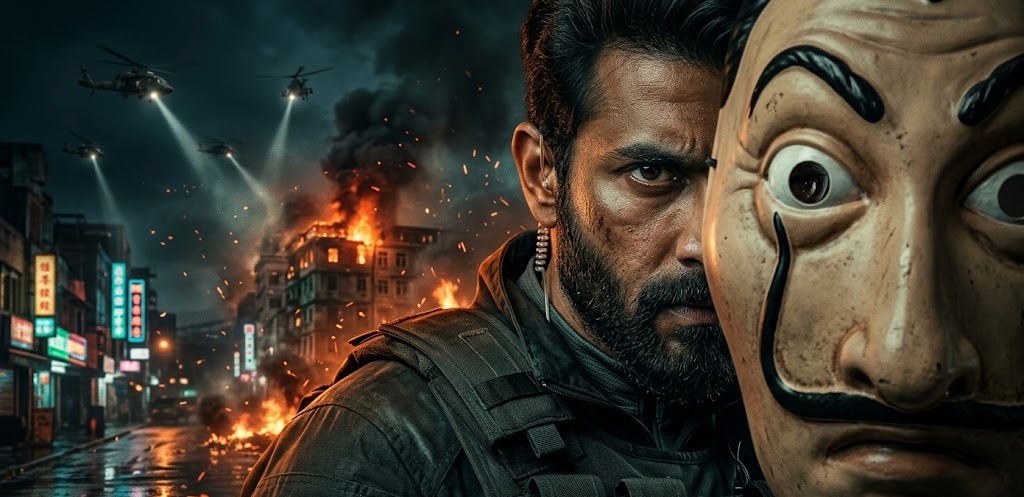
There were a lot of theories on social media. Every frame was picked apart in Reddit forums. People who made TikTok videos about the show earned empires. The Professor became a symbol, and the red outfit and Salvador Dalí mask became famous all over the world. People who saw that costume on Halloween got the joke. That's the level of cultural permeation that most shows never reach.

The End and the Debates of Money Heist Season 5
The last season of Money Heist split the fans. Some people loved the epic ending. Some others thought the ending didn't live up to how great the show had been before. Here's what happened: the robbery worked, but it cost a lot. The Professor had won, but he lost individuals he cared about. The concert didn't end with a party; it ended with sacrifice and confusion.
Without giving too much away, Season 5 showed that the main drama of the show never came from whether or not the robbery would work. It boiled down to whether these folks could get through it together. That's why the finale felt like it was up for debate: it answered certain questions but left others open on purpose. That's also why people kept talking about it for a long time.
It seemed like an unneeded way to get people to watch more of Season 5, but it worked. Fans watched both sections in a matter of days, not weeks.
Frequently Asked Questions About Money Heist
- How many seasons are there, and is the show over?
- Do I have to know Spanish to appreciate the show?
- What time of year is best?
- Is Money Heist based on something that really happened?
The Money Heist's Legacy
Money Heist showed that amazing stories can be told in any language. It showed that people all over the world would like characters who are morally ambiguous and complicated provided the writing was good enough. It showed that a heist program could be about more than just the heist. It could also be about things like identity, loyalty, sacrifice, and the weight of choices.
The show also unintentionally foreshadowed something about how people live nowadays. When people started wearing red costumes and Salvador Dalí masks during genuine protests and crimes, it showed something uncomfortable: the show's symbols had become real. The style of disobedience that Money Heist made popular became a shorthand for resistance itself.
Money Heist taught us why TV is still relevant. In a time when there is so much content, this show stood out because it knew that execution is important. Every moment felt planned, whether it was the planning of a robbery or the planning of a scene. Nothing went to waste.