Nvidia vs Custom Silicon AI Compute: How Google, Microsoft, and Meta Are Reshaping AI Infrastructure
By Sohail Shabbir · Technology · Fri Aug 07 2026
Discover everything you need to know about Nvidia vs Custom Silicon AI Compute. Explore how Google, Microsoft, and Meta are challenging Nvidia's dominance.
Nvidia vs Custom Silicon AI Compute: How Google, Microsoft, and Meta Are Reshaping AI InfrastructureNvidia vs Custom Silicon AI Compute: How Google, Microsoft, and Meta Are Reshaping AI Infrastructure
Published on: August 2026

Introduction: The Battle for the Engine of AI
The generative AI revolution has unleashed a voracious, seemingly insatiable appetite for computational power. As large language models (LLMs) and multimodal AI systems scale from billions to trillions of parameters, the physical infrastructure supporting them has become the central battlefield in the global technology industry. At the heart of this multi-trillion-dollar war is a profound architectural and strategic divergence: Nvidia vs Custom Silicon AI Compute.
For the past decade, Nvidia has operated as the undisputed king of artificial intelligence hardware. Their Graphics Processing Units (GPUs) evolved from rendering video games to becoming the workhorses of deep learning. However, as the cost of training and running AI models skyrockets, the world's largest tech conglomerates—the "hyperscalers" like Google, Microsoft, Meta, and Amazon—are refusing to remain entirely dependent on a single supplier. Their solution? Designing and deploying their own custom silicon.
This comprehensive guide dives deep into the dynamic landscape of AI compute in 2026. We will explore how custom silicon initiatives by Google (TPUs), Microsoft (Maia), and Meta (MTIA) stack up against Nvidia's behemoth architecture, the economic factors driving this shift, and what it means for the future of AI development, startups, and enterprise applications.
The Undisputed King: Nvidia's AI Compute Dominance
To understand the rise of custom silicon, one must first understand the moat that Nvidia has built. Nvidia's dominance in the AI space is not merely a product of hardware prowess, though chips like the H100, H200, and the Blackwell B200 are undeniable marvels of engineering. Nvidia's true competitive advantage lies in a concept that intertwines hardware with an impenetrable software ecosystem.
Nvidia's GPUs are incredibly versatile. They are fundamentally designed for parallel processing, allowing them to handle thousands of calculations simultaneously. This architecture is perfectly suited for the matrix multiplications that form the basis of neural networks. But hardware is only half the story. Nvidia’s CUDA (Compute Unified Device Architecture), a parallel computing platform and programming model introduced in 2006, is the secret sauce.
CUDA allows developers to easily utilize Nvidia GPUs for general-purpose processing. Over almost two decades, an entire generation of AI researchers and engineers has been trained on CUDA. The most popular machine learning frameworks, such as PyTorch and TensorFlow, were optimized for CUDA first and foremost. This created a massive developer lock-in. When a startup or enterprise wants to train a new AI model, the path of least resistance—and highest immediate performance—is almost always an Nvidia GPU.
Furthermore, Nvidia has continually innovated on interconnect technologies like NVLink and InfiniBand (through its Mellanox acquisition). In the era of LLMs, you cannot train a model on a single chip; you need tens of thousands of GPUs working in absolute synchrony. Nvidia provides not just the chip, but the entire data center architecture, creating a formidable barrier to entry for any competitor.
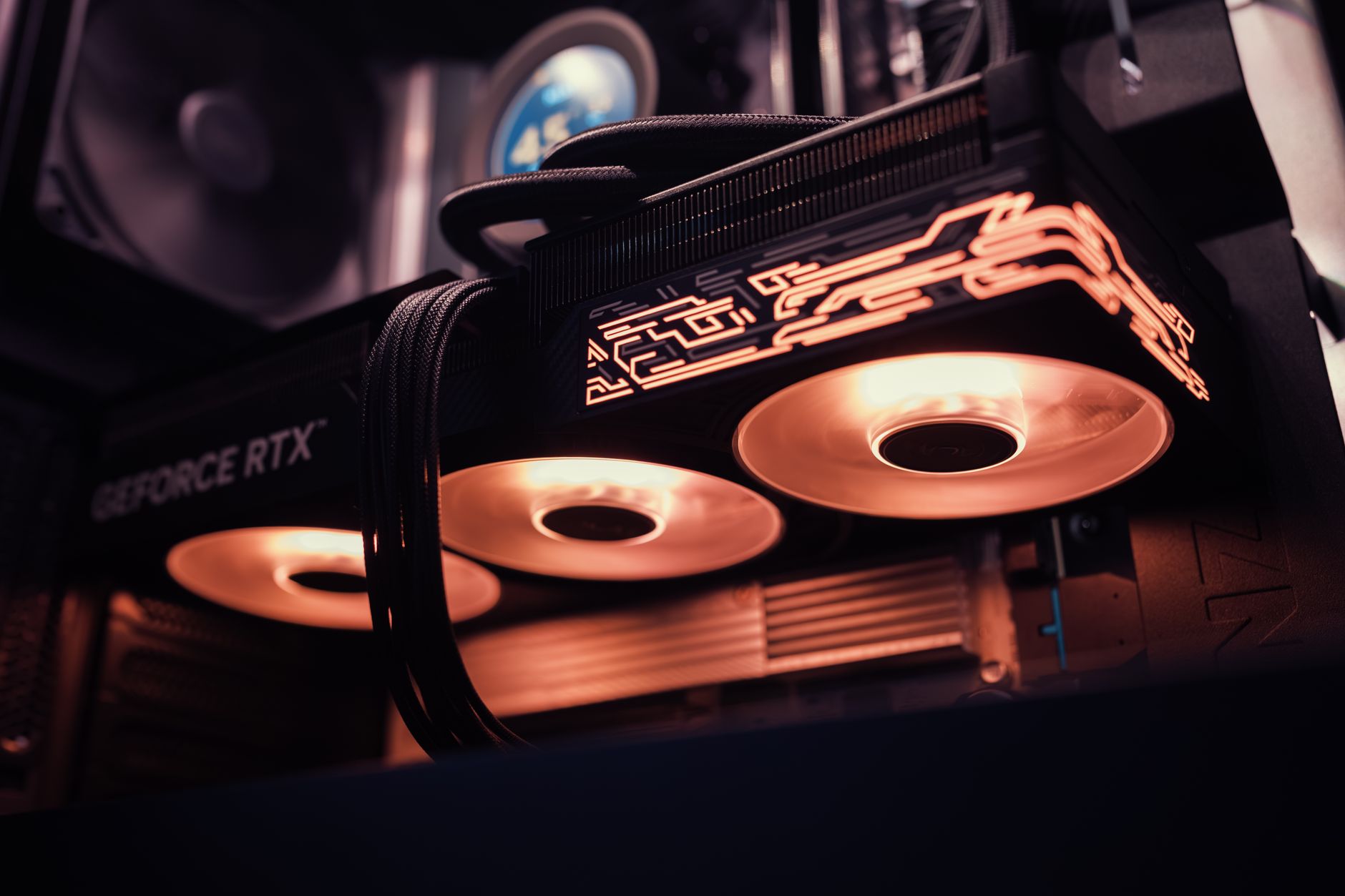
The Rise of Custom Silicon (ASICs) in AI
If Nvidia is so dominant, why are the hyperscalers investing billions in custom silicon? The answer comes down to three critical factors: cost, power efficiency, and workload specialization. The chips built by Google, Microsoft, and Meta are generally Application-Specific Integrated Circuits (ASICs).
Unlike a GPU, which is highly flexible and can handle a wide variety of tasks (gaming, crypto mining, scientific simulations, AI), an ASIC is designed for a very specific workload. In the context of AI, these are often referred to as AI accelerators. Because they are stripped of all the generalized processing units found on a GPU, custom AI chips can theoretically process tensor operations (the math behind AI) much faster and with significantly less power.
As the cost of Nvidia's flagship GPUs routinely exceeds tens of thousands of dollars per chip, and as the energy requirements of AI data centers threaten to overwhelm regional power grids, hyperscalers realized that vertical integration is not just a strategic luxury—it is an existential necessity. By designing their own chips, they can optimize the silicon precisely for their internal software stacks, avoid Nvidia's massive profit margins, and secure a more resilient supply chain.
Google: The Pioneer of Custom AI Chips (TPUs)
Long before the ChatGPT-induced AI boom, Google recognized the computational demands of machine learning. In 2015, Google deployed its first Tensor Processing Unit (TPU). While Nvidia was still adapting GPUs for AI, Google built an ASIC strictly for neural network inference.
Today, Google's TPU architecture is in its v5 and v6 iterations. TPUs are the backbone of Google's AI empire, powering everything from Google Search rankings and YouTube recommendations to their flagship Gemini models. Google’s approach with TPUs highlights the distinct advantages of custom silicon:
- Liquid Cooling and Pod Architecture: Google designs TPUs to operate in massive "Pods"—networked supercomputers connected via optical circuit switches. This allows for incredibly efficient scaling of massive models.
- XLA (Accelerated Linear Algebra): To bypass the CUDA lock-in, Google developed XLA, a domain-specific compiler for linear algebra that optimizes TensorFlow and PyTorch computations for TPUs.
- Cost-Effective Inference: For internal workloads, running inference on TPUs is vastly more cost-effective for Google than purchasing equivalent compute power from Nvidia.
Furthermore, Google has expanded its custom silicon efforts beyond AI accelerators, recently announcing the Axion processor, a custom ARM-based CPU designed for data center workloads, fully cementing its vertical integration strategy.
Microsoft: The Azure Maia and Cobalt Strategy
Microsoft's position in the AI race is unique, primarily due to its deep partnership with OpenAI. Microsoft provides the immense computational resources required to train OpenAI's GPT models. For years, this meant purchasing hundreds of thousands of Nvidia GPUs. However, at the Ignite conference in late 2023, Microsoft unveiled its own custom silicon: Azure Maia (an AI accelerator) and Azure Cobalt (an ARM-based CPU).
The Maia 100 AI accelerator was purpose-built for generative AI workloads, specifically optimized alongside OpenAI to run large language models. Microsoft's entry into the custom silicon space was a watershed moment in the Nvidia vs Custom Silicon AI Compute narrative.
Why did Microsoft build Maia? Firstly, to reduce their absolute dependency on Nvidia. When global GPU shortages occur, Microsoft needs alternatives to ensure Azure can continue servicing its AI clients. Secondly, cloud economics dictate that controlling the hardware stack from the silicon up to the software layer provides immense margin benefits. By optimizing Maia for Azure's specific data center racks, cooling systems, and networking, Microsoft can achieve performance-per-watt metrics that off-the-shelf GPUs struggle to match in a generalized environment.

Meta: The MTIA (Meta Training and Inference Accelerator)
Meta (formerly Facebook) handles some of the largest recommendation engines and open-source AI initiatives (like the Llama models) on the planet. Mark Zuckerberg has been vocal about stockpiling hundreds of thousands of Nvidia H100s. However, Meta is also aggressively developing its custom silicon: the MTIA.
The first generation of MTIA was aimed heavily at internal recommendation workloads—the algorithms that decide what you see on your Facebook and Instagram feeds. These workloads require a unique balance of compute and memory bandwidth that differs slightly from LLM training. By creating MTIA, Meta can optimize its silicon precisely for these specific, highly profitable internal tasks.
More recently, Meta announced newer generations of MTIA designed to tackle the broader demands of generative AI and inference. Meta’s strategy highlights a crucial aspect of custom silicon: you don't necessarily have to beat Nvidia at everything; you just have to beat Nvidia at the specific tasks that run 24/7 in your own data centers. For Meta, running inference for billions of users efficiently is a multi-billion-dollar cost-saving exercise.
Why Are Hyperscalers Building Their Own Chips? A Strategic Breakdown
The aggressive push into custom silicon by the world's largest tech companies is driven by a confluence of technological and economic imperatives:
1. Supply Chain Sovereignty
The AI boom created an unprecedented bottleneck. At the peak of the frenzy, Nvidia GPUs had lead times extending up to a year. For companies like Microsoft and Google, whose entire future valuations depend on AI leadership, waiting for hardware is unacceptable. Custom silicon provides an alternative supply chain, reducing their vulnerability to Nvidia's production constraints or geopolitical issues impacting semiconductor manufacturing in Taiwan (TSMC).
2. Margin Expansion and TCO (Total Cost of Ownership)
Nvidia enjoys gross margins that are the envy of the tech hardware industry (often exceeding 70%). When hyperscalers buy Nvidia chips, they are paying that premium. By designing their own chips, hyperscalers absorb the R&D costs but eliminate the Nvidia markup. At the scale of hundreds of thousands of chips, the Total Cost of Ownership (TCO) heavily favors custom silicon for stable, high-volume workloads.
3. Hardware-Software Co-Design
Nvidia builds chips for the masses. Google, Microsoft, and Meta can build chips exactly for their own software. This "hardware-software co-design" allows engineers to strip away unnecessary silicon real estate and optimize memory hierarchies exactly for the neural networks they are running. This results in vastly superior energy efficiency—a critical factor given the power constraints of modern data centers.
Will Custom Silicon Dethrone Nvidia?
This is the trillion-dollar question in the Nvidia vs Custom Silicon AI Compute debate. The short answer is: No, not entirely, and not anytime soon. But custom silicon will absolutely erode Nvidia's monopoly.
Nvidia will likely remain the gold standard for frontier model training. When a company wants to train the next GPT-5 or Gemini 2.0, they need maximum, unconstrained compute power, and Nvidia's rapid release cycle (moving to an annual architecture cadence with Blackwell and Rubin) ensures they stay at the cutting edge of raw performance.
Furthermore, Nvidia's CUDA ecosystem remains incredibly sticky. For researchers, startups, and academic institutions, the flexibility of Nvidia GPUs is unmatched. You can rent an Nvidia instance in any cloud and run almost any AI workload seamlessly.
However, the narrative shifts when we look at inference. Once a model is trained, running it (inference) requires a different compute profile. As AI becomes ubiquitous, inference will make up the vast majority of AI compute cycles. This is where custom silicon shines. We will likely see a bifurcated future: Nvidia GPUs dominate the training of massive frontier models, while custom silicon (TPUs, Maia, Inferentia, MTIA) takes over the high-volume, highly specific inference workloads and internal hyperscaler operations.
The Impact on AI Startups and Enterprises
For the broader AI ecosystem, this competition is entirely positive. The battle of Nvidia vs Custom Silicon AI Compute drives down the overall cost of compute.
Startups now have options. Through cloud providers, they can choose to train on Nvidia instances for maximum compatibility, or they can leverage tools like PyTorch 2.0 (which has made great strides in hardware agnosticism) to run workloads on Google TPUs or AWS Trainium at a lower cost point.
For enterprises deploying AI, the rise of custom silicon means more competitive pricing from cloud vendors. As Microsoft and Google deploy their own chips, they can offer cheaper API calls for their AI models, accelerating the adoption of generative AI across all sectors of the economy.
Frequently Asked Questions
What is Nvidia vs Custom Silicon AI Compute and why does it matter?
Nvidia vs Custom Silicon AI Compute refers to the architectural battle between Nvidia's flexible, widely-adopted GPUs and the specialized Application-Specific Integrated Circuits (ASICs) developed by major cloud providers (Google, Microsoft, Meta). It matters because this competition drives the cost, efficiency, and future capabilities of all artificial intelligence development.
What are the best resources to learn about Nvidia vs Custom Silicon AI Compute?
The best resources include technical blogs from Google Cloud (TPU architecture), Microsoft Azure (Maia announcements), and Nvidia's own developer documentation. Additionally, semiconductor analysis platforms and AI infrastructure whitepapers offer deep dives into the hardware differences.
How does Google's TPU compare to an Nvidia GPU?
While Nvidia GPUs are designed for parallel processing across varied workloads, Google's Tensor Processing Units (TPUs) are ASICs custom-built specifically for neural network machine learning, particularly utilizing TensorFlow and JAX. TPUs can often provide better cost-to-performance ratios for specific inference tasks.
Why is Nvidia vs Custom Silicon AI Compute important in 2026?
As AI models scale to trillions of parameters, power consumption and hardware costs have skyrocketed. In 2026, custom silicon is essential for hyperscalers to manage their infrastructure costs and ensure supply chain independence from Nvidia's near-monopoly.
Conclusion: The Era of Heterogeneous Compute
The era of single-vendor dominance in AI hardware is slowly sunsetting, giving way to an era of heterogeneous compute. The Nvidia vs Custom Silicon AI Compute paradigm is not a zero-sum game. Nvidia will continue to thrive as the merchant silicon provider of choice, pushing the boundaries of physics and parallel computing architecture. Meanwhile, Google, Microsoft, Meta, and others will continue to optimize their massive data centers with bespoke silicon, driving unprecedented efficiencies at scale.
For the AI industry at large, this diversification of the hardware layer is the best possible outcome. It ensures that the compute bottlenecks of the early 2020s will not strangle the AI innovations of the late 2020s. Whether you are running a model on a massive cluster of Nvidia Blackwell GPUs or executing inference on Google's latest TPU v6, the underlying infrastructure is evolving at breakneck speed, paving the way for the next generation of artificial intelligence breakthroughs.
Tags: ai compute, nvidia, custom silicon, google tpu, microsoft maia, meta mtia