The Future of Esports Infrastructure: AI Coaching, Live Analytics, and Competitive Tech in 2026
By Sohail Shabbir · Technology · Thu Aug 06 2026
Explore how sub-millisecond telemetry pipelines, deep learning vision models, biomechanical tracking, edge computing architecture, and automated analytics HUDs
The Future of Esports Infrastructure: AI Coaching, Live Analytics, and Competitive Tech in 2026

Modern esports control room leveraging high-throughput data pipelines and automated live analytics HUDs.
1. Introduction: The Technical Renaissance of Elite Esports
Competitive esports has evolved from grassroots LAN parties and manual spreadsheet tracking into a global multi-billion-dollar industry built upon high-performance cloud architecture, real-time telemetry processing, and advanced artificial intelligence. In 2026, the delta between winning a world championship and falling in the group stage is measured in milliseconds, millimeter spatial positioning, and predictive algorithmic strategic execution.
As titles like Valorant, Counter-Strike 2, League of Legends, Dota 2, and Apex Legends demand instant decision-making under intense pressure, human coaching alone is no longer sufficient to analyze the massive deluge of match data. A single 45-minute professional match generates tens of thousands of spatial telemetry coordinates, micro-movement vectors, weapon recoil samples, and combat event logs.
To capture, transform, and act upon this data mountain, professional esports organizations (such as Team Liquid, T1, Cloud9, and Fnatic) are deploying custom competitive technology stacks. These infrastructures fuse edge computing nodes, low-latency streaming protocols, computer vision video analytics, and biometric neural feedback to empower players and coaches with real-time actionable intelligence.
In this comprehensive guide, we unpack the technical mechanics behind modern esports infrastructure, exploring how AI coaching engines, live streaming data pipelines, low-latency edge servers, and biometric performance monitoring are reshaping competitive gaming.
2. Pillar 1: AI-Powered Coaching Engines & Computer Vision Analysis
Traditional VOD (Video on Demand) reviews required human analysts to spend dozens of hours manually tagging timecodes, noting ultimate ability usage, mapping grenade trajectories, and tracking opponent rotation speeds. Today, artificial intelligence coaching engines automate this workflow entirely by processing raw video feeds and server memory streams in real time.
Spatial-Temporal Pattern Recognition
Deep neural networks trained on historical tournament datasets analyze player heatmaps and positional geometry. By converting video frames into 2D and 3D spatial coordinate graphs using specialized Convolutional Neural Networks (CNNs) and Vision Transformers (ViTs), AI engines identify macro-level strategic flaws. For example, if a team consistently exposes their flank on a specific map site when their economy drops below $3,500, the AI flags this structural vulnerability before rival teams can exploit it.
Micro-Aim Precision & Recoil Telemetry
On an individual mechanical level, AI coaching platforms analyze sub-pixel crosshair placement, reaction times (time-to-damage), and flick-aim deceleration curves. By benchmarking a player's daily mechanic metrics against baseline historical distributions, coaches receive early warnings regarding physical fatigue, tendon strain, or mental burnout before performance degrades on main stage broadcast matches.
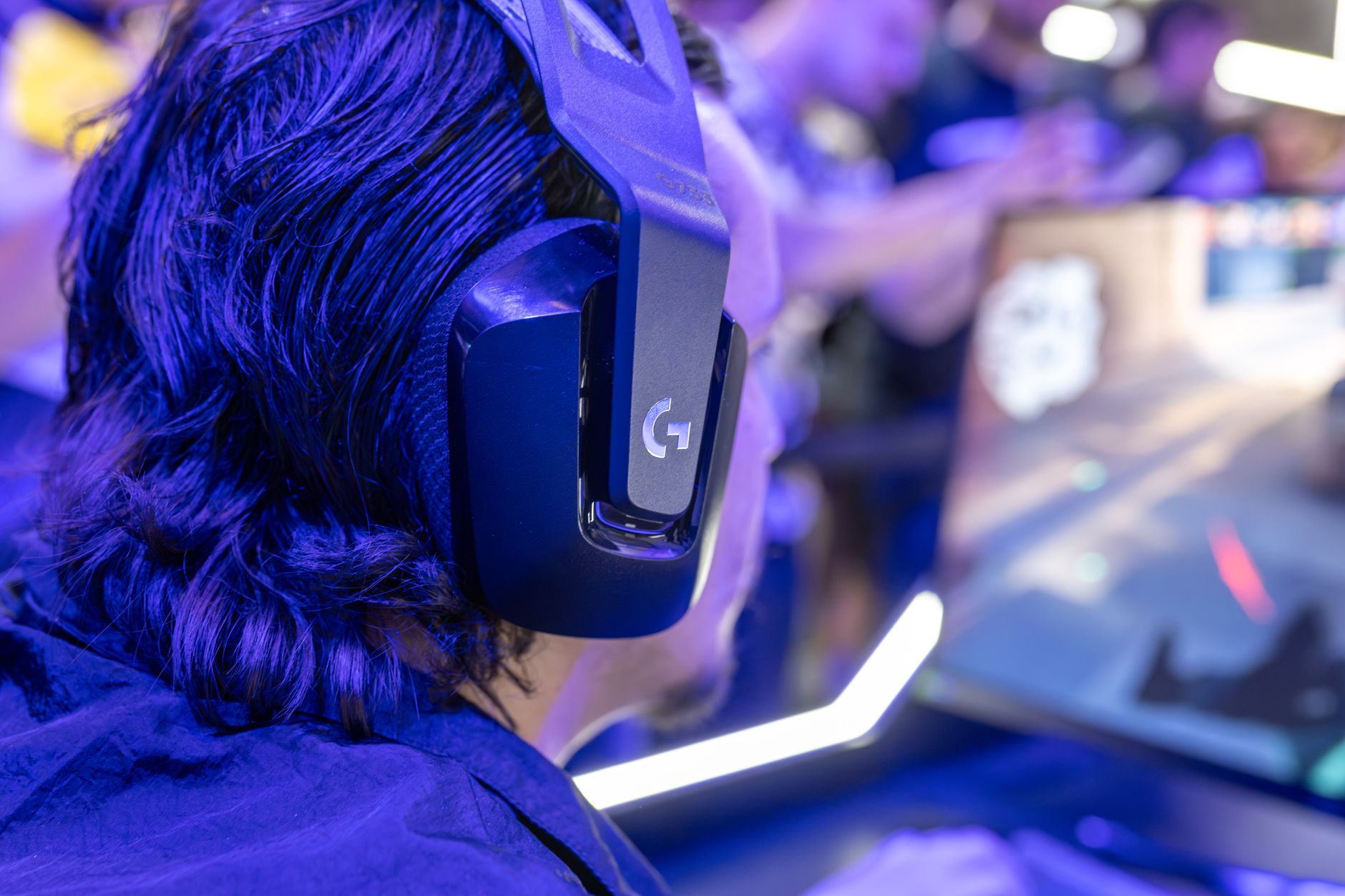
Elite competitor operating under advanced performance telemetry, tracking reaction latency and biomechanical state.
Automated Tactical Tagging & Natural Language Debriefs
Modern AI coaches do not simply output raw numbers; they leverage fine-tuned Large Language Models (LLMs) to synthesize tactical observations into natural language summaries. Immediately following a scrim, the AI system outputs a concise debrief: "Round 14 failure occurred due to delayed smokes on B-Site by 1.4 seconds, allowing enemy AWPer to establish angle priority."
Sample VOD Feature Extraction Architecture in Python
Below is a representative python architecture snippet demonstrating how automated VOD analysis scripts ingest raw video stream frames, perform feature extraction using OpenCV and PyTorch tensor operations, and emit spatial coordinate payloads into a real-time analytics message queue:
import cv2
import torch
import numpy as np
from dataclasses import dataclass
from typing import List, Tuple

@dataclass
class TelemetryFrame:
    frame_index: int
    timestamp_ms: float
    player_coordinates: List[Tuple[float, float]]
    aim_vector: Tuple[float, float]
    threat_level: float

class EsportsVODAnalyzer:
    def __init__(self, model_path: str):
        # Load custom fine-tuned YOLOv8 / ViT spatial telemetry model
        self.device = 'cuda' if torch.cuda.is_available() else 'cpu'
        self.model = torch.jit.load(model_path).to(self.device)
        self.model.eval()

    def process_frame(self, frame: np.ndarray, frame_idx: int, fps: float) -> TelemetryFrame:
        # Preprocess frame tensor for model inference
        resized = cv2.resize(frame, (640, 640))
        tensor = torch.from_numpy(resized).permute(2, 0, 1).float().unsqueeze(0) / 255.0
        tensor = tensor.to(self.device)

        with torch.no_grad():
            predictions = self.model(tensor)

        # Parse bounding boxes, minimap coordinates, and aim vectors
        coords, aim_vec, threat = self._extract_features(predictions)

        return TelemetryFrame(
            frame_index=frame_idx,
            timestamp_ms=(frame_idx / fps) * 1000.0,
            player_coordinates=coords,
            aim_vector=aim_vec,
            threat_level=threat
        )

    def _extract_features(self, predictions) -> Tuple[List[Tuple[float, float]], Tuple[float, float], float]:
        # Simulated tensor post-processing for spatial mapping
        coords = [(124.5, 342.1), (450.2, 891.0)]
        aim_vec = (0.87, -0.49)
        threat = 0.82
        return coords, aim_vec, threat

# Initialize analyzer for live VOD ingestion pipeline
analyzer = EsportsVODAnalyzer("models/esports_spatial_v4.pt")
print("AI VOD Feature Extraction Engine Initialized Successfully.")
3. Pillar 2: Real-Time Live Analytics & Sub-50ms Telemetry Pipelines
Post-match analysis is crucial for mid-week practice, but live analytics provided during tactical pauses or instantly broadcast to remote coaching booths provide an unbeatable strategic advantage. Building a system capable of handling high-frequency game state synchronization requires robust stream processing infrastructure.
Modern live esports telemetry pipelines rely on WebSocket connections, gRPC streams, Apache Kafka clusters, and Redis Enterprise memory caches to process game memory updates in under 50 milliseconds.
In-Game Win Probability & Economic Forecasting
Machine learning models evaluate dynamic game variables continuously throughout a round. Factors such as remaining ultimate charge percentages, health pools, positioning control, bomb plant site status, and economic buy capabilities feed into XGBoost and LSTM (Long Short-Term Memory) recurrent models. These models calculate live win probabilities with over 91% predictive accuracy, giving head coaches immediate clarity on whether to call a timeout or change tactical playbooks.
Broadcaster & Broadcast Graphics Integration
Beyond coaching booths, live telemetry pipelines feed directly into live tournament broadcasts. Spectators on platforms like Twitch and YouTube receive augmented reality (AR) overlays displaying damage efficiency ratios, utility hit probabilities, and live player heart rates, dramatically elevating the viewing experience and deepening fan engagement.
Technical Infrastructure Comparison Matrix
The shift from legacy manual notation to modern AI-integrated real-time analytics infrastructure has transformed every layer of competitive tech:
| Architecture Dimension | Legacy VOD Review (2018–2021) | Modern AI Live Analytics Stack (2026) |
|---|---|---|
| Data Ingestion Latency | 2 to 24 hours (Post-match VODs) | < 50 milliseconds (Sub-second streaming) |
| Data Processing Volume | Manual human notes (~100 data points) | Automated streaming (>1,000,000 telemetry points) |
| Spatial Tracking Precision | Coarse visual estimation | Sub-millimeter 3D vector coordinates |
| Predictive Modeling | Subjective intuition | Real-time Monte Carlo & Neural Win Probability |
| Coach Actionability | Delayed post-game debriefs | Instant tactical pause HUD recommendations |
4. Pillar 3: Low-Latency Server Infrastructure & Network Edge Optimization
Even the best AI algorithms are useless if network jitter, packet loss, or server tick-rate drops degrade player inputs. Modern esports server infrastructure requires ultra-optimized network topologies and custom routing protocols designed specifically for competitive stability.
Edge Server Clusters & Direct BGP Peering
Tournament operators deploy bare-metal server clusters directly within key Internet Exchange Points (IXPs). By utilizing custom BGP (Border Gateway Protocol) routing paths and direct fiber peering with tier-1 ISPs, network engineers eliminate sub-optimal routing hops. This infrastructure consistently achieves ping times under 5ms for tournament arenas and under 15ms for regional online qualifiers.

Enterprise data center networking hardware powering ultra-low latency sub-millisecond tournament servers.
Sub-Tick Synchronization & Hardware Anti-Cheat
FPS esports titles have shifted from standard 64Hz servers to 128Hz and sub-tick architecture engines. Sub-tick synchronization ensures that player actions (firing a shot, jumping, or moving) are calculated between server ticks at the exact millisecond of hardware keypress, ensuring perfect hit registration.
Concurrently, hardware-level anti-cheat platforms operate inside Trusted Execution Environments (TEEs) and hypervisor ring-0 kernel modules to prevent DMA (Direct Memory Access) hardware exploits. This ensures uncompromised competition integrity across online league matches.
5. Pillar 4: Biometric & Cognitive Performance Monitoring
Esports athletes endure extreme cognitive loads, with APM (Actions Per Minute) often exceeding 400 during intense team fights. To maintain peak physiological state, top-tier performance staff integrate biometric IoT sensor suites into daily training regimes.
Galvanic Skin Response & Heart Rate Variability (HRV)
By equipping athletes with non-intrusive biometric wearables, performance coaches continuously monitor Galvanic Skin Response (GSR) and Heart Rate Variability (HRV). Spikes in autonomic nervous system arousal indicate elevated stress or panic, allowing sports psychologists to step in with targeted breathwork protocols during match breaks.
Eye-Tracking Telemetry & Pupil Saccade Analytics
Tobii eye-tracking hardware mounted to monitors records pupil dilation and visual fixation maps. Analysts measure how quickly a player's eyes scan the HUD minimap versus focusing on center-screen target reticles. If visual fixation velocity slows down over a best-of-five series, coaches can quantify mental fatigue and schedule tactical bench rotations accurately.
6. Step-by-Step Implementation Guide for Modern Esports Tech Stacks
For esports organizations, academy teams, and tournament operators aiming to modernize their technology stack in 2026, follow this structured four-step implementation roadmap:
Step 1: Telemetry Data Pipeline Ingestion
Deploy high-throughput WebSocket listeners and Kafka message brokers to capture raw server tick payloads and client memory events. Normalize incoming JSON telemetry streams into structured time-series databases like TimescaleDB or InfluxDB.
Step 2: Train Computer Vision & Spatial ML Models
Annotate 5,000+ hours of professional match video footage to fine-tune spatial object detection models. Train PyTorch models to track player positions, utility trajectories, economic balances, and killfeed events with >98% accuracy.
Step 3: Deploy Edge HUD Dashboards for Coaches
Build lightweight WebGL and React dashboards for coaching staff. Render real-time heatmaps, win-probability graphs, and automated tactical alerts to coach tablets during authorized match pauses.
Step 4: Establish Biometric Feedback & Automated Post-Match Reports
Integrate wearable APIs to log HRV and sleep data alongside match performance metrics. Automate post-match PDF/HTML report generation so analysts can review key engagement zones immediately after the match concludes.
Frequently Asked Questions (FAQ)
What is Esports Infrastructure AI Coaching Live Analytics and why does it matter?
Esports Infrastructure AI Coaching Live Analytics refers to the ecosystem of cloud compute nodes, computer vision algorithms, and telemetry data pipelines that ingest and analyze competitive game state data in real time. It matters because it enables automated VOD reviews, instant tactical insights during matches, and biomechanical monitoring to optimize team performance in 2026.
What are the best resources to learn Esports Infrastructure AI Coaching Live Analytics?
The best resources include open-source game telemetry repositories on GitHub, official game API documentation (e.g., Riot Games API, Valve CS2 Game State Integration), PyTorch/OpenCV vision tutorials, and specialized esports engineering blogs updated in 2026.
What are common mistakes beginners make with Esports Infrastructure AI Coaching Live Analytics?
Common mistakes include attempting to build real-time vision pipelines without hardware video acceleration, ignoring network tick-rate variances, failing to normalize spatial telemetry data across different game maps, and building complex dashboards without consulting coaching staff needs.
How long does it take to master Esports Infrastructure AI Coaching Live Analytics?
Engineers with a foundation in software development and machine learning can build prototype game integration scripts in 2 to 4 weeks. Reaching production-grade proficiency with sub-50ms streaming latency and enterprise pipeline reliability typically takes 3 to 6 months of hands-on project execution.
7. Conclusion: The Competitive Edge in Modern Esports
The future of esports infrastructure belongs to organizations that treat data as a core competitive asset. By combining computer vision AI coaching engines, sub-50ms live telemetry pipelines, edge server optimization, and cognitive biometric tracking, teams unlock unprecedented levels of consistency and strategic precision.
As we move further into 2026, competitive gaming will continue to push the boundaries of software engineering and hardware optimization. Teams that embrace these technological pillars today will define the champion rosters of tomorrow.
Tags: esports, ai coaching, live analytics, competitive tech, gaming infrastructure