Unreal Engine 5 vs. Custom Game Engines: Why AAA Studios Are Shifting Development Workflows
By Sohail Shabbir · Coding & Programming · Tue Aug 04 2026
An in-depth architectural, economic, and strategic analysis of why game development giants are retiring proprietary tech stacks in favor of Epic Games Unreal En
Unreal Engine 5 vs. Custom Game Engines: Why AAA Studios Are Shifting Development Workflows
An in-depth architectural, economic, and strategic analysis of why game development giants are retiring proprietary tech stacks in favor of Epic Games' powerhouse engine.

1. The Seismic Paradigm Shift in AAA Game Development
For decades, the mark of a true AAA video game studio was its proprietary game engine. Industry leaders built their corporate reputations on bespoke technology stacks tailored to their specific gameplay mechanics, rendering pipelines, and art pipelines. Electronic Arts championed Frostbite across its sports and action franchises, Ubisoft relied on Anvil and Snowdrop, Square Enix developed the Luminous Engine for Final Fantasy XV, and CD Projekt Red engineered REDengine to drive the massive open-world RPG environments of The Witcher 3: Wild Hunt and Cyberpunk 2077.
However, the landscape of interactive entertainment has undergone a dramatic structural transformation. Over the past three years, a cascade of high-profile announcements sent shockwaves through the engineering community: CD Projekt Red abandoned REDengine in favor of a multi-year strategic partnership with Epic Games for the next Witcher saga and Cyberpunk sequel; Crystal Dynamics retired its legacy Foundation Engine to build the next Tomb Raider in Unreal Engine 5; EA's BioWare shifted development of the upcoming Mass Effect title to UE5; and Konami adopted UE5 for its flagship remakes. Proprietary engine development, once considered the ultimate competitive moat, is increasingly viewed as an unsustainable operational liability.
This article explores the multi-faceted reasons behind this historic workflow migration. We examine the economic tradeoffs of in-house research and development (R&D), analyze the technical leaps introduced in Unreal Engine 5 (UE5)—including Nanite, Lumen, World Partition, and the Mass Entity Framework—and evaluate how standardized toolchains alter studio recruitment, developer velocity, and long-term project viability.
2. The Economics of Engine Development: R&D Overhead vs. Commercial Licensing
The financial reality of modern game creation is brutal. Next-generation AAA titles regularly exceed budgets of $200 million to $400 million, with development cycles stretching from four to seven years. When a studio maintains a custom game engine, a substantial fraction of that capital is consumed by technology maintenance rather than gameplay innovation.
The Hidden Cost of In-House R&D
A competitive AAA engine requires a specialized core team of 40 to 80 senior engineers specializing in low-level C++ systems, graphics APIs (Vulkan, DirectX 12, Metal), audio synthesis, physics simulation, spatial partitioning, animation blending, network serialization, and internal editor tools. Assuming an average annual compensation package of $180,000 per engineer (inclusive of benefits, equity, and equipment), maintaining an engine team represents an annual cash burn of $7.2 million to $14.4 million—before a single line of game code or a single 3D model is created.
Furthermore, engine maintenance suffers from compounding technical debt. When new graphics API features arrive—such as DirectX Raytracing (DXR), Mesh Shaders, DirectStorage, or Variable Rate Shading (VRS)—in-house teams must spend months refactoring low-level hardware abstraction layers (HALs). If the internal engine team lags behind, hundreds of game designers, animators, and environment artists find their productivity throttled by outdated editor tooling.

Figure 1: High-performance software engineering teams are redirecting focus from foundational engine R&D to gameplay features.
Evaluating the 5% Royalty Model
Epic Games offers Unreal Engine 5 under a business model where studios pay a 5% royalty fee on gross revenues after the first $1,000,000 earned. For a blockbuster game generating $200 million in gross revenue, Epic's royalty fee totals roughly $9.95 million. While nearly $10 million sounds substantial, executive decision-makers compare this figure against the cumulative cost of running an internal engine team for a five-year development cycle ($35M–$70M in engineering salaries alone).
Beyond direct salary savings, licensing UE5 provides studios with immediate access to Epic's staff of over 1,000 engine developers, automated platform certification pipelines for PlayStation 5 and Xbox Series X|S, and continuous feature updates backed by battle-testing in Fortnite—a live-service game running simultaneously across mobile, console, and PC platforms.
Onboarding, Hiring, and Talent Mobility
One of the most pressing operational bottlenecks in AAA development is talent onboarding. Proprietary engines rely on bespoke editors, proprietary scripting languages, and undocumented legacy codebases. Bringing a newly hired graphics programmer or level designer up to speed on a custom engine often takes 6 to 9 months of hand-holding and internal training.
In contrast, Unreal Engine 5 represents a standardized global skill set. Universities, trade schools, and independent developers train hundreds of thousands of creators in UE5 every year. When a studio adopting UE5 hires a new artist or developer, they can open the editor and begin contributing production assets on their very first day. This talent liquidity dramatically reduces project risk and mitigates the severe churn experienced during crunch periods.
3. Technical Deep Dive: UE5 Innovations Outpacing Custom Architecture
Beyond economic drivers, Unreal Engine 5 introduced architectural paradigms that fundamentally alter how 3D graphics, world building, and entity simulation are executed. For most proprietary engines, retrofitting existing rendering pipelines to match UE5's core feature set would require a ground-up rewrite spanning half a decade.
A. Nanite Virtualized Geometry: The Death of Manual LODs
Historically, 3D art pipelines required artists to create multiple manually simplified versions of every asset—known as Levels of Detail (LODs)—to maintain stable frame rates. A high-poly character or environment prop with 2,000,000 polygons needed LOD0, LOD1, LOD2, and LOD3 meshes, alongside manually baked normal maps to preserve micro-surface detail.
UE5's Nanite system replaces traditional mesh rendering with a virtualized geometry renderer. Nanite streams geometry in real-time, analyzing screen-space pixel coverage to render only the exact polygon detail needed for each pixel. Key technical advantages include:
- Direct High-Poly Asset Import: Artists import ZBrush sculpts and CAD models directly into the scene containing tens of millions of polygons without performance penalties.
- Zero Manual LOD Generation: Eliminates hundreds of human hours previously wasted on decimation, retopology, and normal map baking.
- No Pop-in or LOD Popping: Seamless transitions ensure sub-pixel triangle density without visible geometric snapping during camera motion.
- Drastic Memory Optimization: High-compression streaming formats store geometry efficiently in VRAM, leveraging modern GPU hardware features.
B. Lumen Real-Time Dynamic Global Illumination
Traditional game lighting relied heavily on static lightmap baking—a tedious process where light transport calculations were precomputed and stored into texture atlas maps. Baking lighting for a large open-world level could take build farms days or weeks, blocking level designers from previewing gameplay changes in real-time.
Lumen provides fully dynamic global illumination and specular reflections. It recalculates diffuse indirect lighting instantly when light sources move, environments collapse, or doors open. By combining hardware-accelerated ray tracing with software ray tracing (distance fields), Lumen allows artists to achieve photorealistic indoor and outdoor lighting at 60 FPS without precomputed lightmaps.
C. World Partition & One File Per Actor (OFPA)
In older game engines—including Unreal Engine 4—massive game maps were split into rigid sub-levels. Developers constantly encountered version control lockouts because multiple team members could not edit the same level file concurrently without triggering catastrophic git merge conflicts.
UE5 solves this via World Partition and One File Per Actor (OFPA). The entire game world is managed as a single continuous grid. Individual actors (trees, buildings, spawners, lights) are stored as separate atomic files on disk. Hundreds of environment artists, lighting designers, and gameplay programmers can work inside the exact same world region simultaneously without stepping on each other's commits.
D. Mass Entity Framework & Procedural Content Generation (PCG)
To populate modern game worlds with rich wildlife, pedestrian crowds, and complex foliage, UE5 provides the Mass Entity Framework—a high-performance, Data-Oriented Technology Stack (DOTS) built for CPU cache locality. It allows games to execute AI behavior and physics calculations for over 100,000 entities simultaneously at sub-millisecond execution times.
Complemented by the PCG Framework, designers can construct node-based procedural rules that populate thousands of square kilometers of terrain with realistic biomes, roads, and ruins based on mathematical spatial constraints, reducing world construction timelines from years to months.
4. Architectural Comparison: Unreal Engine 5 vs. Proprietary Engines
To summarize how UE5 stacks up against typical in-house custom engines, the following comparative matrix details key technical and operational parameters:
| Vector | Unreal Engine 5 | Proprietary Custom Engine |
|---|---|---|
| Geometry Pipeline | Virtualized geometry (Nanite); automatic pixel-scale detail streaming. | Manual LOD generation, decimation, and static normal map baking. |
| Global Illumination | Lumen dynamic GI & reflections; instant feedback in editor. | Precomputed lightmap baking or custom limited ray-tracing passes. |
| World Collaboration | World Partition & One File Per Actor (OFPA); conflict-free multi-user editing. | Sub-level streaming bounds; file locking & frequent merge conflicts. |
| Source Code Access | 100% C++ source code access on GitHub; full internal modification allowed. | Full internal control; zero external community contributions. |
| Talent Availability | Vast global talent pool; zero ramp-up time for experienced hires. | Extremely limited pool; 6–9 months onboarding duration per developer. |
| Maintenance Overhead | Offloaded to Epic Games (1,000+ engineers continuous updates). | High ($8M–$15M/year in core salary expenses & tech debt maintenance). |
| Financial Structure | 5% revenue royalty above $1M gross (negotiable for AAA custom enterprise terms). | Fixed internal payroll cost regardless of game commercial success. |
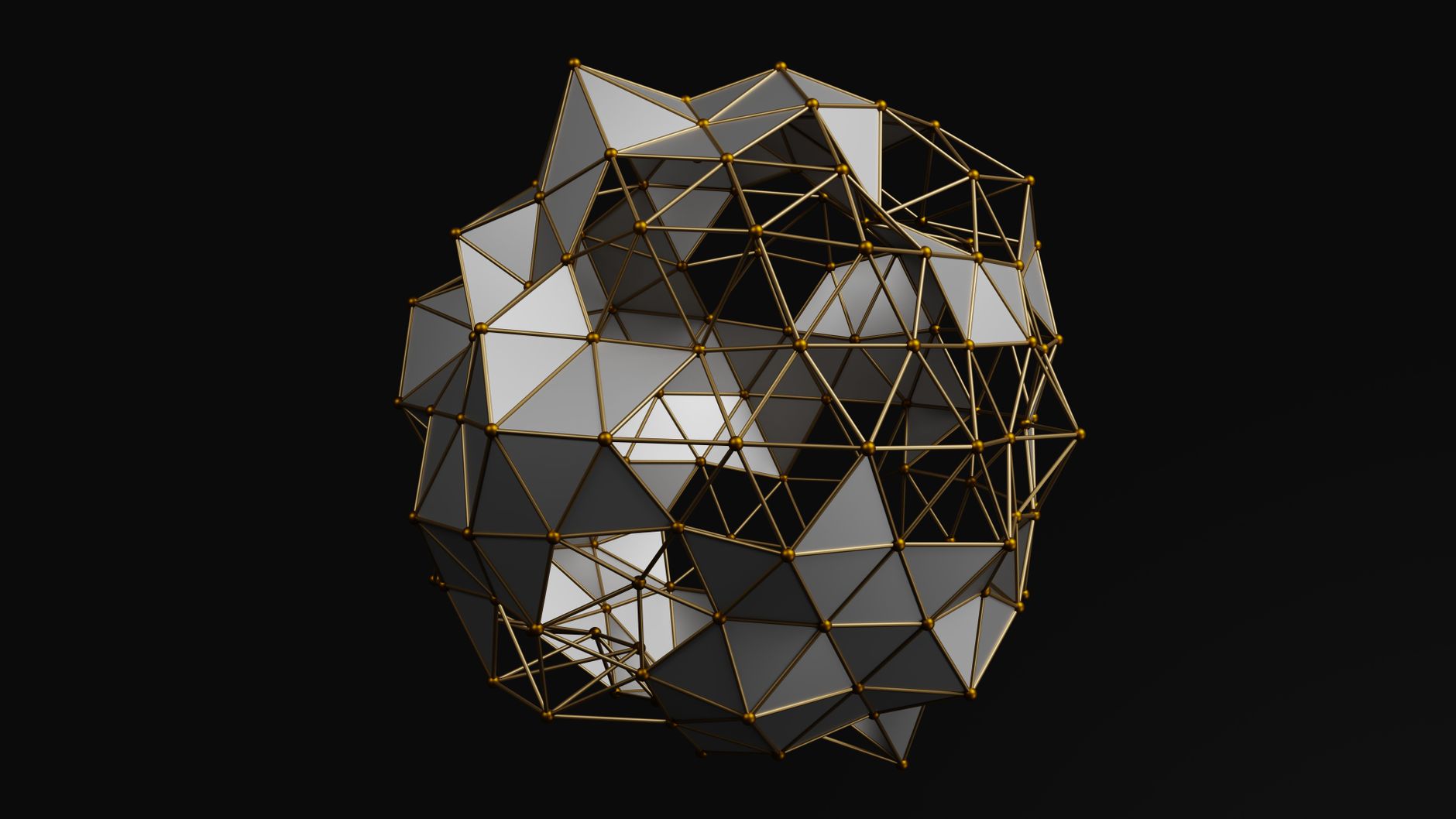
Figure 2: Geometric micro-structures and nanite mesh virtualization represent a quantum leap over legacy polygon pipelines.
5. Code & Architectural Workflow: Custom Vulkan Boilerplate vs. UE5 C++ Subsystem
To appreciate why developers prefer Unreal Engine 5's C++ ecosystem, let us contrast the boilerplate code required to initialize and render a custom 3D primitive in a custom DirectX 12/Vulkan engine versus implementing a managed gameplay component in UE5.
The Proprietary Engine Approach: Manual Hardware Abstraction Layer (HAL)
In a custom C++ game engine, establishing a pipeline state object (PSO), binding descriptors, and dispatching draw calls requires hundreds of lines of low-level boilerplate code for every rendering feature:
// Custom Engine Low-Level Vulkan Pipeline State Initialization (Excerpt)
VkGraphicsPipelineCreateInfo pipelineInfo{};
pipelineInfo.sType = VK_STRUCTURE_TYPE_GRAPHICS_PIPELINE_CREATE_INFO;
pipelineInfo.stageCount = 2;
pipelineInfo.pStages = shaderStages;
pipelineInfo.pVertexInputState = &vertexInputInfo;
pipelineInfo.pInputAssemblyState = &inputAssembly;
pipelineInfo.pViewportState = &viewportState;
pipelineInfo.pRasterizationState = &rasterizer;
pipelineInfo.pMultisampleState = &multisampling;
pipelineInfo.pDepthStencilState = &depthStencil;
pipelineInfo.pColorBlendState = &colorBlending;
pipelineInfo.pDynamicState = &dynamicState;
pipelineInfo.layout = pipelineLayout;
pipelineInfo.renderPass = renderPass;
pipelineInfo.subpass = 0;

if (vkCreateGraphicsPipelines(device, VK_NULL_HANDLE, 1, &pipelineInfo, nullptr, &graphicsPipeline) != VK_SUCCESS) {
    throw std::runtime_error("Failed to create custom rendering pipeline state!");
}
// Manual synchronization, VkSemaphore management, and swapchain rebuilds required...
The Unreal Engine 5 Approach: Modular C++ Subsystem and Reflection System
In Unreal Engine 5, hardware abstraction, memory management, garbage collection, and multi-threaded rendering command queues are completely encapsulated. Developers leverage UE5's macro reflection system (UCLASS, UPROPERTY, UFUNCTION) to build high-performance gameplay components clean of hardware initialization clutter:
// UE5 Custom Gameplay Subsystem Header (CustomSensorSubsystem.h)
#pragma once

#include "CoreMinimal.h"
#include "Subsystems/WorldSubsystem.h"
#include "CustomSensorSubsystem.generated.h"

DECLARE_DYNAMIC_MULTICAST_DELEGATE_OneParam(FOnSpatialSensorTriggered, AActor*, TriggeredActor);

UCLASS(BlueprintType, Blueprintable)
class GAME_API UCustomSensorSubsystem : public UWorldSubsystem
{
    GENERATED_BODY()

public:
    virtual void Initialize(FSubsystemCollectionBase& Collection) override;
    virtual void Deinitialize() override;

    UFUNCTION(BlueprintCallable, Category = "Spatial Tech|Analytics")
    void RegisterSpatialAnchor(AActor* TargetActor, FVector Location);

    UPROPERTY(BlueprintAssignable, Category = "Spatial Tech|Events")
    FOnSpatialSensorTriggered OnSensorTriggered;

private:
    UPROPERTY()
    TArray<TObjectPtr<AActor>> TrackedAnchors;
};
Notice how Unreal Engine automatically handles reflection for visual scripting (Blueprints), automatic memory garbage collection via TObjectPtr, and thread-safe dynamic delegate broad-casting. Engineers spend zero time managing GPU swapchains or platform-specific memory allocation buffers, focusing 100% of their energy on gameplay mechanics and performance profiling.
6. When Proprietary Game Engines Still Make Sense
Despite the overwhelming migration toward Unreal Engine 5, custom engine development is not entirely extinct. Certain elite studios continue to invest heavily in proprietary tech stacks where specialized game mechanics demand extreme low-level control that general-purpose commercial engines cannot match.
1. Extreme Niche Specialization: Rockstar's RAGE Engine
Rockstar Games continues to evolve its proprietary RAGE (Rockstar Advanced Game Engine) for Grand Theft Auto VI. RAGE is handcrafted for unprecedented open-world simulation density: custom AI pedestrian pathfinding, ultra-realistic water physics deformation, vehicle handling math, dynamic weather simulation, and character inverse kinematics (IK). Replacing RAGE with a commercial engine would require rewriting millions of lines of proprietary physics systems tailored specifically to Rockstar's game design philosophy.
2. Proprietary Hardware Optimization: Guerilla's Decima Engine
Guerrilla Games' Decima Engine—powering Horizon Forbidden West and Kojima Productions' Death Stranding 2—is engineered specifically to extract maximum performance from Sony's PlayStation architecture. Decima excels at procedural foliage rendering, streaming massive terrain datasets, and hardware-level memory management customized for console unified memory architectures.
3. Royalty Independence at Massive Scale
For mega-blockbuster games projected to generate $1 billion to $3 billion in lifetime revenue, paying a 5% royalty fee represents $50 million to $150 million paid to Epic Games. At that scale, giant publishers like Nintendo, Capcom (RE Engine), and Sony may choose to maintain internal engine divisions to avoid long-term vendor lock-in and preserve technical autonomy.
7. The Future Outlook: Hybrid Enterprise Workflows & AI Integration
The choice facing modern AAA game studios is rarely a binary decision between "stock Unreal Engine" and "pure proprietary engine." Instead, the industry is converging on a Hybrid Enterprise Workflow.
Because Epic Games provides full C++ source code access to Unreal Engine 5 via GitHub, AAA studios fork the engine repository and build custom internal branches. Studios engineer bespoke C++ plugins, replace default shading models with proprietary custom Render Hardware Interface (RHI) shaders, and integrate proprietary machine learning runtime models while keeping UE5's world editor, Nanite geometry renderer, and UI framework intact.
As AI-assisted asset creation, generative neural radiance fields (NeRFs), and automated QA testing bots become standard components of AAA production pipelines, Epic Games' massive engineering velocity ensures UE5 will remain at the bleeding edge. Studios adopting UE5 future-proof their pipelines, empowering creative directors to spend less time reinventing the engine wheel and more time crafting unforgettable interactive experiences.
8. Frequently Asked Questions (FAQ)
Why are major AAA studios abandoning their in-house proprietary game engines for Unreal Engine 5?
AAA studios are switching to Unreal Engine 5 primarily due to escalating R&D costs, technical debt, and hiring bottlenecks associated with custom engines. UE5 provides cutting-edge technologies like Nanite and Lumen out-of-the-box, allowing studios to reduce development cycles, eliminate engine maintenance overhead ($8M–$15M/year), and onboard experienced developers instantly from a vast global talent pool.
How does Epic Games' royalty model compare financially to maintaining an in-house engine team?
Epic Games charges a 5% royalty on gross revenues exceeding $1 million. For a game making $100 million gross, the royalty fee is approximately $4.95 million. In comparison, maintaining an internal engine R&D team of 50 senior engineers over a typical 5-year AAA development cycle costs between $35 million and $70 million in salaries and benefits, making UE5 licensing far more cost-effective for most studios.
What technical advantages do Nanite and Lumen offer over traditional custom engine rendering pipelines?
Nanite virtualized geometry eliminates manual Level of Detail (LOD) generation, retopology, and normal map baking by streaming billion-polygon film-quality assets in real time without performance drops. Lumen provides dynamic real-time global illumination and reflections, completely removing the need for slow, static lightmap baking build farms.
Can AAA studios customize Unreal Engine 5's source code to fit unique gameplay requirements?
Yes. Epic Games provides 100% C++ source code access to Unreal Engine 5 via GitHub. AAA studios regularly fork the UE5 repository to create custom engine branches, write bespoke rendering plugins, integrate proprietary physics extensions, and optimize memory layouts specifically tailored to their game titles.
What are the potential risks or downsides for a studio migrating to Unreal Engine 5?
Risks include reliance on a third-party vendor (Epic Games) for core bug fixes and roadmap priorities, potential financial penalties at massive revenue scale (5% royalty on billions), memory footprint overhead compared to stripped-down custom engines, and the challenge of retraining legacy proprietary engineers to adopt Unreal's C++ framework and object model.
Tags: unreal engine 5, game engines, aaa studios, graphics programming, game dev