Zero-Trust Security for Modern Web Applications: Best Practices in 2026
By Sohail Shabbir · Best Practices · Tue Aug 04 2026
Discover the definitive 2026 guide to Zero-Trust Architecture (ZTA) for modern web applications, featuring mTLS, OPA Rego code examples, and DevSecOps best prac
Zero-Trust Security for Modern Web Applications: Best Practices in 2026
In an era dominated by distributed microservices, serverless edge networks, and AI-driven automated attack vectors, traditional perimeter-based security models are obsolete. Discover the definitive 2026 guide to implementing Zero-Trust Architecture (ZTA) for modern web applications.
Featured Header: Zero-Trust Security Paradigm for Modern Web Systems
Executive Summary
The web application security landscape in 2026 has reached a pivotal tipping point. Cyber threats no longer originate exclusively from outside network firewalls; insider compromises, compromised supply chain dependencies, and sophisticated credentials-stuffing bots regularly operate inside network boundaries.
Zero-Trust Architecture (ZTA) dismantles the flawed assumption that any user, device, or microservice inside the network perimeter should be inherently trusted. By adopting the core principles of "Never Trust, Always Verify," "Least Privilege Access," and "Assume Breach," web application architects can build resilient systems capable of isolating threats, protecting sensitive customer data, and maintaining strict continuous compliance.
1. The Evolution of Web Application Threats in 2026
Historically, enterprise cyber defense relied on the classic "castle-and-moat" paradigm. Organizations secured their web applications by placing firewalls, Intrusion Detection Systems (IDS), and Virtual Private Networks (VPNs) around their internal corporate networks. Once a user or service successfully authenticated at the perimeter gateway, it enjoyed broad lateral movement across internal databases, microservice APIs, and background job queues.
In 2026, this legacy approach has completely collapsed under the weight of three modern web architecture transformations:
- Cloud-Native & Serverless Sprawl: Applications are distributed across multi-cloud infrastructure, Kubernetes clusters, serverless workers at the edge (such as Cloudflare Workers or AWS Lambda@Edge), and third-party SaaS APIs. There is no single physical or logical perimeter to defend.
- AI-Powered Automated Attack Vectors: Threat actors utilize autonomous AI agents capable of sniffing zero-day vulnerabilities in web frameworks, generating contextual spear-phishing payloads, and orchestrating high-velocity API credential harvesting at scale.
- Sophisticated Supply Chain Vulnerabilities: Open-source packages, npm modules, PyPI packages, and container base images are frequently targeted by malicious actors. Securing the application code alone is insufficient if third-party libraries run with unmonitored privileges.
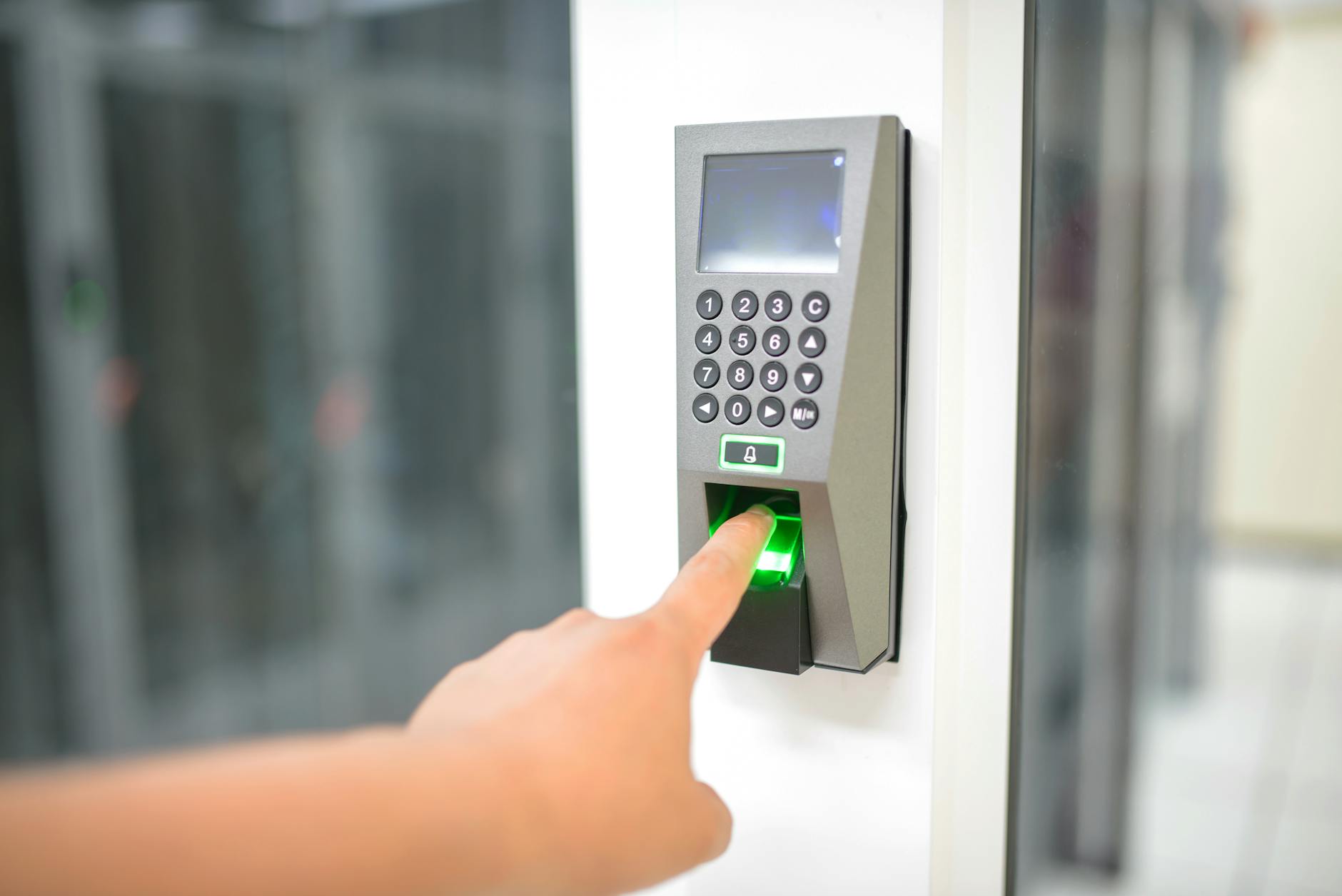
Figure 1: Continuous identity attestation replaces static once-per-session authentication in 2026 Zero-Trust web apps.
According to global cybersecurity research reports from authoritative engineering bodies like the NIST Special Publication 800-207 on Zero Trust Architecture, security must shift directly onto the application workload, the API boundary, and the individual transaction level.
2. Core Pillars of Zero-Trust for Web Applications
Implementing Zero-Trust is not a matter of purchasing a single software solution; it is a holistic engineering philosophy built upon five foundational technical pillars:
Pillar 1: Continuous Identity Verification & Strong Authentication
In a Zero-Trust application model, user identity is re-evaluated continuously throughout an active session, rather than relying solely on an initial login token. Modern web applications utilize:
- FIDO2 / WebAuthn & Passkeys: Eliminating phishing-prone passwords in favor of hardware-backed public key cryptography tied to biometric authenticators.
- OAuth 2.1 & OpenID Connect (OIDC): Standardized protocols enforced with PKCE (Proof Key for Code Exchange) to prevent authorization code injection.
- Continuous Risk-Based Session Assessment: Tracking signal indicators such as device posture, anomaly in IP geographical shifts, browser fingerprint changes, and session behavior score to trigger step-up authentication dynamically.
Pillar 2: Microsegmentation & Workload Identity
Microservices inside a web architecture should never trust each other by default simply because they reside on the same internal network or Kubernetes namespace. Microsegmentation enforces granular security controls:
- Mutual TLS (mTLS): Encrypting all internal east-west service-to-service communication with bi-directional X.509 certificate validation.
- SPIFFE/SPIRE Standards: Providing cryptographic, short-lived workload identity documents (SVIDs) to containers and microservices without requiring hardcoded secrets or long-lived API keys.
- Network Security Policies: Standardizing default-deny egress and ingress rules across container pods and serverless clusters.
Pillar 3: Dynamic Authorization (ABAC & ReBAC)
Traditional Role-Based Access Control (RBAC) quickly becomes rigid and prone to privilege bloat in modern enterprise software. Zero-Trust web applications favor fine-grained, policy-driven authorization models:
- Attribute-Based Access Control (ABAC): Making real-time access decisions based on user attributes, resource sensitivity, environmental conditions (time, location, risk level), and current threat levels.
- Relationship-Based Access Control (ReBAC): Evaluating access permissions based on relationships between subjects and objects (e.g., Google Zanzibar model).
- Policy-as-Code Engines: Decoupling authorization logic from application code using engines like Open Policy Agent (OPA) or AWS Cedar.
Pillar 4: Comprehensive Data Encryption & Confidential Computing
Data must be protected across all states: at rest, in transit across public and private networks, and in use during compute runtime.
- Envelope Encryption & Hardware Security Modules (HSMs): Key rotation policies using dedicated HSMs or cloud KMS systems.
- Field-Level Encryption (FLE): Encrypting sensitive PII, payment tokens, and health records in application memory before saving to databases.
- Confidential Computing: Utilizing hardware-isolated enclaves (AMD SEV, Intel SGX, AWS Nitro Enclaves) to protect sensitive data while processing in RAM.
Pillar 5: Real-Time Observability & eBPF Telemetry
Zero-Trust requires total visibility. You cannot protect or verify what you cannot monitor. Modern web platforms implement eBPF (Extended Berkeley Packet Filter) kernel-level probing to inspect network calls, system calls, and service interactions in real time without introducing runtime sidecar overhead.
3. Step-by-Step Implementation & Code Examples
To transition from theory to practice, let's explore three real-world code implementations demonstrating Zero-Trust principles in web application development.
Code Example 1: Node.js Zero-Trust Middleware with Strict mTLS & Token Verification
The following Express/Node.js middleware validates that the incoming HTTP request carries a verified client TLS certificate (mTLS) and a cryptographically valid short-lived JWT token containing explicit scope attributes.
const fs = require('fs');
const https = require('https');
const express = require('express');
const jwt = require('jsonwebtoken');

const app = express();
app.use(express.json());

// Public Key for JWT Verification (Fetched from trusted internal KMS)
const JWT_PUBLIC_KEY = fs.readFileSync('./certs/jwt_public_key.pem', 'utf8');

// Zero-Trust Request Attestation Middleware
function verifyZeroTrustContext(req, res, next) {
  // 1. Verify mTLS Certificate details from client
  const cert = req.socket.getPeerCertificate();
  if (!req.client.authorized || !cert || !cert.subject) {
    return res.status(403).json({
      error: 'Access Denied: Invalid or missing peer mTLS certificate.',
      code: 'MTLS_VERIFICATION_FAILED'
    });
  }

  // 2. Validate Authorization Bearer Token
  const authHeader = req.headers.authorization;
  if (!authHeader || !authHeader.startsWith('Bearer ')) {
    return res.status(401).json({
      error: 'Access Denied: Missing Bearer Token.',
      code: 'MISSING_AUTH_TOKEN'
    });
  }

  const token = authHeader.split(' ')[1];

  try {
    const decoded = jwt.verify(token, JWT_PUBLIC_KEY, {
      algorithms: ['RS256'],
      issuer: 'https://auth.company-internal.net',
      maxAge: '15m' // Enforce strict 15-minute token TTL
    });

    // 3. Ensure Subject Identity matches Client Cert Subject CN
    const certCommonName = cert.subject.CN;
    if (decoded.sub_spiffe && decoded.sub_spiffe !== certCommonName) {
      return res.status(403).json({
        error: 'Access Denied: Workload identity mismatch between JWT and mTLS cert.',
        code: 'IDENTITY_MISMATCH'
      });
    }

    // Attach verified identity context to request
    req.zeroTrustContext = {
      subject: decoded.sub,
      workloadId: certCommonName,
      roles: decoded.roles || [],
      riskScore: decoded.risk_score || 0
    };

    next();
  } catch (err) {
    return res.status(401).json({
      error: 'Access Denied: Token validation failed or token expired.',
      details: err.message
    });
  }
}

// Protected Microservice Route
app.get('/api/v1/financial-records', verifyZeroTrustContext, (req, res) => {
  if (req.zeroTrustContext.riskScore > 40) {
    return res.status(429).json({
      error: 'Step-up authentication required due to elevated risk score.',
      code: 'RISK_THRESHOLD_EXCEEDED'
    });
  }

  res.json({
    status: 'success',
    data: [ { id: 'TX-9021', amount: 45000.00, currency: 'USD' } ]
  });
});
Code Example 2: Fine-Grained Authorization using Open Policy Agent (OPA) Rego
In a Zero-Trust web application, authorization decisions are externalized into dedicated policy engines. The following OPA Rego policy enforces dynamic Attribute-Based Access Control (ABAC) for sensitive healthcare records:
package app.abac.authorization

default allow = false

# Allow access only if all conditions are satisfied
allow {
    input.action == "read"
    input.resource.type == "medical_record"
    is_authorized_role
    is_valid_device_posture
    is_within_working_hours
    is_owner_or_assigned_doctor
}

# Rule 1: Role check
is_authorized_role {
    input.user.roles[_] == "physician"
}

# Rule 2: Device compliance check (Zero-Trust Posture)
is_valid_device_posture {
    input.user.device.disk_encrypted == true
    input.user.device.os_version_valid == true
    input.user.device.edr_agent_active == true
}

# Rule 3: Time-window restriction
is_within_working_hours {
    input.request_time >= input.user.shift_start
    input.request_time <= input.user.shift_end
}

# Rule 4: Patient assignment check
is_owner_or_assigned_doctor {
    input.user.id == input.resource.assigned_doctor_id
}

Figure 2: Microsegmentation and mTLS encrypted mesh protecting internal server racks and microservices.
Code Example 3: Short-Lived Access Tokens with Real-Time Revocation via Redis Bloom Filters
Long-lived access tokens pose severe security risks in web applications. Under Zero-Trust, tokens expire quickly (e.g., 5-15 minutes). When immediate token revocation is required (e.g., suspicious activity detected), a high-performance distributed Redis Bloom Filter allows sub-millisecond revocation verification:
const Redis = require('ioredis');
const redis = new Redis(process.env.REDIS_ZERO_TRUST_URL);

/**
 * Checks whether a given JWT Token ID (jti) has been revoked.
 * Uses Redis Bloom Filter for ultra-fast low-latency lookup.
 */
async function isTokenRevoked(jti) {
  try {
    // Check if the JTI exists in the revoked tokens bloom filter
    const exists = await redis.call('BF.EXISTS', 'revoked_tokens_bf', jti);
    if (exists === 1) {
      // Confirm with exact Redis key check to handle rare bloom filter false positives
      const exactMatch = await redis.get(`revoked:${jti}`);
      return exactMatch !== null;
    }
    return false;
  } catch (error) {
    console.error('Revocation check error, failing closed for Zero Trust:', error);
    return true; // Zero Trust default-deny on operational error
  }
}

/**
 * Revokes a compromised token immediately across the entire global application cluster.
 */
async function revokeToken(jti, ttlSeconds = 900) {
  await redis.call('BF.ADD', 'revoked_tokens_bf', jti);
  await redis.set(`revoked:${jti}`, '1', 'EX', ttlSeconds);
}
4. Perimeter-Based vs Zero-Trust Web Architecture
To evaluate how Zero-Trust reshapes web application engineering, the table below compares traditional perimeter security against 2026 Zero-Trust standards across seven key operational dimensions:
| Security Dimension | Traditional Perimeter Security | 2026 Zero-Trust Web Architecture |
|---|---|---|
| Trust Assumption | Implicit trust for any entity inside the internal network perimeter. | Zero implicit trust. Explicit verification required for every request. |
| Authentication Model | One-time authentication at session start (Passwords, basic MFA). | Continuous contextual attestation, Passkeys/WebAuthn, biometric tokens. |
| Service Communication | Unencrypted HTTP or plaintext internal TCP between microservices. | Strict mTLS encryption and SPIFFE/SPIRE cryptographic workload identity. |
| Authorization Logic | Coarse-grained RBAC hardcoded into application code. | Dynamic ABAC/ReBAC powered by externalized Policy-as-Code engines (OPA). |
| Blast Radius Control | High risk of lateral movement once an entry point is compromised. | Microsegmented micro-perimeters contain breaches to single instances. |
| Telemetry & Logging | Reactive application logs, periodic firewall audit scans. | Real-time eBPF kernel telemetry, automated SIEM analytics, immutable logs. |
| Compliance Alignment | Manual point-in-time compliance audits (SOC2, ISO 27001). | Continuous automated compliance enforcement and policy verification. |
5. Operational Best Practices & DevSecOps Integration
Achieving Zero-Trust status for enterprise web applications requires embedding security into your continuous integration and deployment pipelines (CI/CD):
1. Automated Software Bill of Materials (SBOM) Generation
Generate standardized SPDX or CycloneDX SBOMs during every build pipeline execution. Continuously cross-reference dependencies against vulnerability databases (CVEs) to automatically block vulnerable container images before deployment.
2. Dynamic Ephemeral Secrets Management
Never store static API keys, database credentials, or secret keys in application configuration files or environment variables. Integrate secret management systems like HashiCorp Vault or AWS Secrets Manager to issue dynamic, short-lived database credentials that automatically expire after use.
3. Shift-Left Policy Testing
Treat access policies as code. Run automated unit and integration tests against OPA Rego or Cedar policies inside pull requests to catch privilege elevation bugs before code reaches staging environments.
6. Common Mistakes Beginners Make (And How to Avoid Them)
When software teams begin their Zero-Trust transformation, they frequently fall into predictable traps. Avoid these key mistakes:
Mistake 1: Treating Zero-Trust as a Single Vendor Product
Zero-Trust is an architectural framework, not a standalone software product. Buying a "Zero-Trust Network Access" tool without refactoring application authorization, mTLS service identity, and API governance leaves critical security gaps.
Mistake 2: Degrading User & Developer Experience
Prompting end-users for multi-factor authentication on every button click destroys usability. Implement context-aware, risk-based step-up authentication so legitimate users experience frictionless navigation while high-risk requests trigger verification.
Mistake 3: Ignoring Internal Service-to-Service Traffic
Securing public-facing HTTP endpoints while leaving internal backend REST or gRPC microservices unencrypted and unauthenticated creates a massive blast radius if a single pod is compromised. Enforce mTLS across all internal microservice calls.
Mistake 4: Relying on Static Long-Lived Authorization Tokens
JWTs issued with 24-hour expiration dates defeat the core premise of Zero-Trust. Use short-lived access tokens (5-15 minutes max) combined with centralized, ultra-low latency revocation mechanisms.
Frequently Asked Questions (FAQ)
What is Zero-Trust Security for Modern Web Applications and why does it matter?
Zero-Trust Security for Modern Web Applications is an architectural framework operating on the explicit principle that no user, device, network packet, or microservice is trusted by default, whether inside or outside the network perimeter. It matters in 2026 because modern web apps are highly distributed across multi-cloud and edge environments where traditional network boundaries no longer exist, making continuous verification essential to prevent data breaches.
How does Zero-Trust differ from traditional perimeter-based security?
Traditional perimeter security relies on a "castle-and-moat" model where entities inside the internal network are trusted by default. In contrast, Zero-Trust enforces strict identity verification, microsegmentation, mTLS encryption, and fine-grained Attribute-Based Access Control (ABAC) for every single API request, eliminating lateral movement risks.
What are the best resources to learn Zero-Trust Security for Modern Web Applications?
The best resources include the official NIST SP 800-207 Zero Trust Guidelines, the Cloud Security Alliance (CSA) Software-Defined Perimeter specifications, Open Policy Agent (OPA) documentation, and hands-on cloud-native engineering courses updated in 2026.
How do I get started with Zero-Trust Security for Modern Web Applications?
Start by conducting a thorough asset and data flow audit. Next, implement passwordless FIDO2/Passkey authentication at the edge, enforce mTLS between internal microservices using service meshes like Istio or Linkerd, and transition hardcoded RBAC roles to externalized OPA policy engines.
How long does it take to master Zero-Trust Security for Modern Web Applications?
Mastering Zero-Trust architecture depends on your baseline web security background. Software engineers typically master core principles (mTLS, JWT attestation, OPA Rego) within 4-8 weeks, while full enterprise application migration roadmap execution takes between 6 to 18 months.
Why is Zero-Trust Security for Modern Web Applications critical in 2026?
In 2026, AI-driven cyber threats, sophisticated supply chain attacks, and multi-cloud serverless deployments have rendered legacy perimeter defenses ineffective. Zero-Trust minimizes blast radius, ensures strict continuous compliance (SOC2, GDPR, HIPAA), and protects proprietary data against sophisticated internal and external breaches.
Actionable 10-Point Zero-Trust Web Engineering Checklist
- Enforce Passwordless WebAuthn / Passkeys: Phase out legacy password inputs for primary web user logins.
- Implement Strict mTLS: Mandate cryptographic X.509 certificate validation across all inter-service REST/gRPC endpoints.
- Shorten Access Token Lifespans: Set JWT access token expiration TTL to a maximum of 15 minutes.
- Deploy Real-Time Revocation: Utilize Redis Bloom Filters or distributed caches to invalidate compromised tokens immediately.
- Externalize Authorization Policies: Migrate hardcoded role checks to Open Policy Agent (OPA) or Cedar engines.
- Audit Dependencies via SBOM: Automate CycloneDX SBOM generation and CVE scanning in CI/CD pipelines.
- Adopt Dynamic Secrets Management: Eliminate static API keys in favor of dynamic short-lived Vault credentials.
- Enable eBPF Telemetry: Deploy eBPF kernel probes for zero-overhead visibility into network socket activity.
- Isolate Workloads with Microsegmentation: Implement default-deny Kubernetes NetworkPolicies across all cluster namespaces.
- Conduct Continuous Penetration Testing: Perform automated red-team simulations and threat modeling on every release cycle.
Written by Expert Engineering Contributor • Reviewed for 2026 Web Architecture Standards
© 2026 Daily Blogs Tech Insights. All rights reserved.
Tags: zero-trust, web security, mtls, opa, devsecops, cloud native